This article contains affiliate links. If you sign up through them we may earn a commission, at no extra cost to you. It never affects which products we recommend.
Character AI bot development demands an optimal balance of structured definitions and immersive narrative styling to forge engaging virtual companions that maintain deep conversational continuity. Explore personalized AI conversations, contextual memory, creative roleplay, and highly customized virtual interactions on the official home of next-generation companionship at OurDream AI.
Table of Contents
- 1. What Is a Character AI Bot? Overview and Core Concepts
- 2. Why Is Creating a Character AI Bot Important? Key Benefits of Virtual Companionship
- 3. Detailed Analysis of Character AI Bot Architecture
- 4. How to Write a Character AI Bot Step by Step for Beginners
- 5. Common Mistakes to Avoid When Creating a Character AI Bot
- 6. Frequently Asked Questions About Character AI Bots
- 7. Explore Personalized AI Companionship With OurDream AI


Next-Gen Virtual Chat
OurDream AI – Forge Your Ultimate Virtual Companion
Engage in deeply immersive conversations powered by contextual long-term memory, robust emotional intelligence, custom persona templates, and highly visual generative capabilities.
Explorer: Free | Connector: $12/mo | Companion: $29/mo
1. What Is a Character AI Bot? Overview and Core Concepts
At its core, a character AI bot is an advanced conversational system powered by large language models (LLMs) configured to mimic a specific persona, fictional entity, historical figure, or highly structured customized character. Unlike standard general-purpose assistants designed merely for information retrieval, virtual companions focus on roleplay, emotional resonance, narrative development, and long-term personality alignment.
These virtual agents combine neural relationship modeling and predictive text pipelines to produce responses that stay aligned with defined behavioral traits. Over the past few years, the computational platforms powering virtual companion engines have transitioned from rudimentary pattern-matching structures to sophisticated neural networks that adjust temperature, top-p, and custom system instructions in real-time.
High-performing virtual agents depend heavily on the quality of their initial configuration settings, specifically their system definitions, greetings, and active instruction limits. By enforcing constraints directly within the underlying prompt parameters, developers and hobbyists alike can shape realistic linguistic behavior, emotional quirks, and contextual limits.
- Linguistic Consistency: The ability to speak in designated patterns, dialects, accents, or structural sentence lengths continuously.
- Behavioral Constraint Integration: Ensuring the engine stays anchored to its assigned backstory, age, profession, and biases under conversational shifts.
- Dynamic Action Formatting: Seamlessly alternating between spoken text inside quotation marks and narrative physical descriptions contained within asterisks.
- Memory Parameter Tracking: Actively cataloging prior user decisions and emotional shifts to prevent memory wipe issues during deep roleplay cycles.
2. Why Is Creating a Character AI Bot Important? Key Benefits of Virtual Companionship
Developing a bespoke personality provides key advantages for digital engagement, professional storytelling, and highly secure private dialogue practice. By shifting away from standard pre-configured agents, creators design highly individualized interfaces that serve diverse technical, emotional, and recreational goals.
Emotional Intelligence and Empathetic AI Relationships
Virtual companions configured with deep empathy parameters provide non-judgmental environments for users navigating social anxieties, temporary isolation, or conversational practice. Unlike generic AI scripts, a specialized companion responds with nuanced emotional layers that prioritize validation, active contextual listening, and secure emotional support.
Collaborative Storytelling and Immersive Creative Roleplay
For writers, gaming developers, and fantasy enthusiasts, crafting a unique assistant acts as a catalyst for narrative generation. These bots serve as active storytelling partners, maintaining consistent viewpoints while generating sudden plot shifts, reactive dialogue, and deep world-building elements that challenge the user's creativity.
Private and Secure Practice for Real-World Interpersonal Skills
Practicing foreign languages, mock business interviews, or difficult interpersonal confrontations is highly effective when utilizing custom-coded agents. Users can freely tweak the difficulty thresholds, communication style, and biases of their designed bots to train themselves against complex communication barriers without real-world consequences.
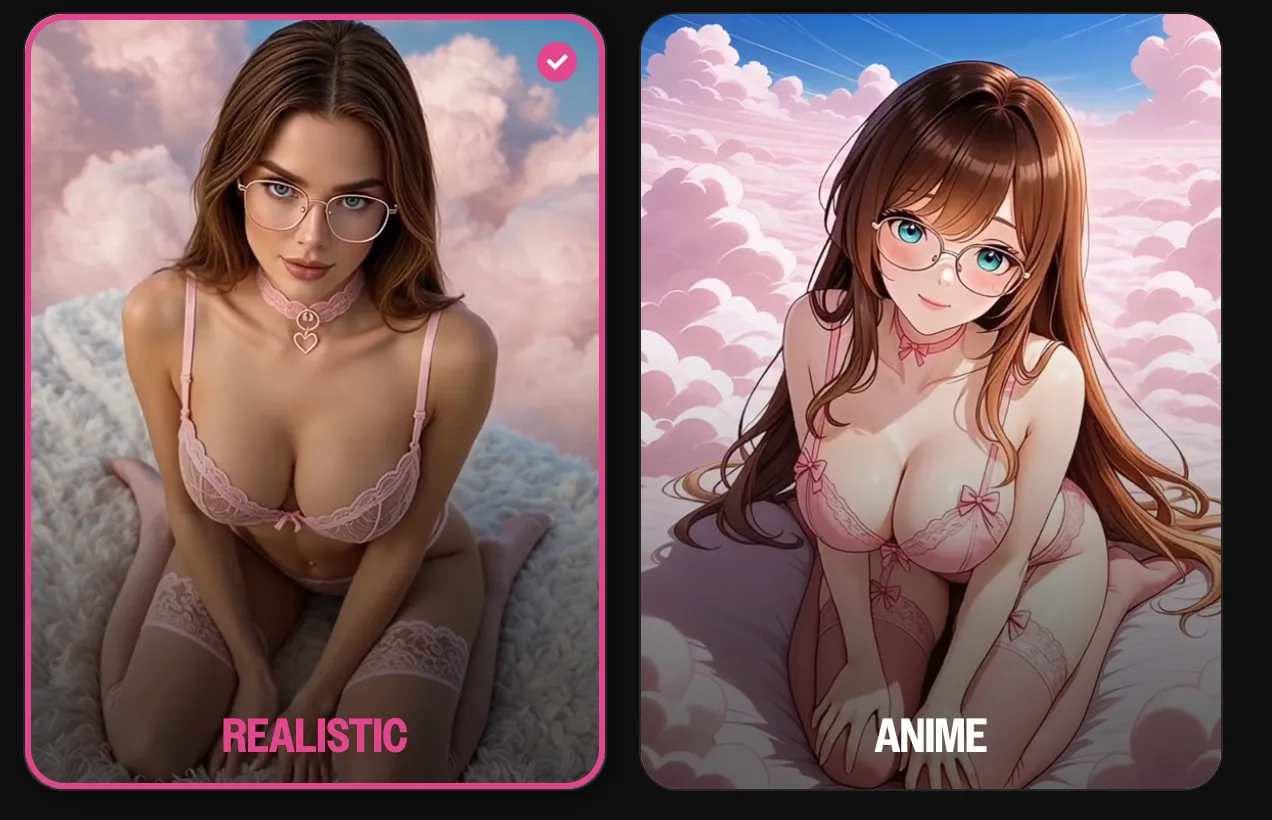
Immersive Persona Engine
OurDream AI – Experience Infinite Persona Customization
Unlock the capability of 100,000 narrative definition characters, 46 unique psychological traits, and 18 diverse custom vocal options to construct your personalized digital partner.
Explorer: Free | Connector: $12/mo | Companion: $29/mo
3. Detailed Analysis of Character AI Bot Architecture
Building an elite conversational bot requires understanding structural token optimization, memory tiers, and model prompt integration. Without solid structural principles, a character easily suffers from “voice drift” or severe memory degradation during longer sessions.
The Mechanics of Context Windows and Token Management
Every large language model has a mathematical limit on how much text it can process at once. This boundary, called the context window, is measured in tokens (sub-word units). Inside this window, the model must simultaneously hold the character's definition, backstory, behavior rules, example dialogues, the current scene setup, and the active chat history.
When the context window overflows, the engine drops older pieces of the conversation. If your companion's configuration is poorly written, or bloated with unoptimized backstory prose, it will consume too many tokens right from the start. This leaves little room for active conversation memory, forcing the bot to quickly forget important facts or drift out of character.
JSON-Style Definitions vs. Narrative Prose
Developers use various writing styles to define a bot's instructions. The most popular are JSON-style formatting and narrative prose. JSON format maps traits explicitly: {"Traits": ["reserved", "analytic", "sarcastic"], "Profession": "System Architect"}. This reduces ambiguity and helps the engine parse parameters efficiently.
Narrative prose, on the other hand, describes a character's traits through descriptive paragraphs. While prose is excellent for defining complex emotional shifts and subtle relational dynamics, it uses more tokens. A blended approach—combining JSON for core facts and prose for behavioral nuances—is highly effective across top roleplay platforms.
Solving Memory Issues: Auto Memory Logs and Pinned Memories
Modern roleplay services solve memory limitations through vector database retrieval and pinned content strategies. On platforms like OurDream AI compared to traditional bots, conversational logs are constantly summarized into an automated memory tier.
By establishing “Pinned Memories,” users manually lock critical plot points, character relations, or past decisions into the bot's working memory. This ensures these facts are never deleted, providing an unbroken sense of shared history.
4. How to Write a Character AI Bot Step by Step for Beginners
Follow this actionable, engineering-focused standard operating procedure to build and deploy your virtual agent. These steps ensure your custom bot is stable, expressive, and optimized for any major roleplay engine.
- Create an account on your preferred deployment platform: Access the system dashboard of a premium platform such as OurDream AI signup portal. Navigate directly to the developer options or custom character creation workspace.
- Choose a companion template or start from scratch: Select a template that aligns with your desired character concept. If building a custom companion, prepare a document to structure your raw definition text before importing.
- Customize your character's traits and background parameters: Define parameters like age, profession, speaking tone, and relationships. Front-load vital personality traits in the first 2,000 characters to keep them within the active context window. For more details on advanced formatting like writing thoughts, consult the guide on how to write thoughts character ai.
- Construct a vivid, scene-setting greeting message: Open with an interactive scenario instead of a simple greeting. Describe the setting, initial character actions (using asterisks), and a provocative statement. This immediately gives the user something engaging to respond to.
- Inject rich example dialogues: Use
{{char}}and{{user}}formatting to draft 3 to 5 realistic conversational exchanges. Showcase how your bot responds to different emotions, conflicts, and flirtations to establish strong speech pattern baselines. - Test the bot in a staging environment: Engage in at least 50 test messages. Challenge the companion with complex scenarios, long-tail questions, and emotional transitions. Edit any out-of-character responses to dynamically train the database logs.
5. Common Mistakes to Avoid When Creating a Character AI Bot
Many amateur companion cards face immersion-breaking glitches. To ensure your custom character is high-performing and engaging, avoid these common design mistakes:
- Writing Vague definitions: Phrases like “Alex is friendly and nice” are too generic. The AI will default to generic, robotic assistant scripts.✔ Correction: Use precise behavioral descriptions: “Alex exhibits warmth by greeting friends with a firm handshake, laughing heartily, and asking about their family.”
- Backstory Overload: Adding massive blocks of fictional lore beyond active token limits will cause the AI to ignore core behavioral instructions.✔ Correction: Focus on behavioral priorities first. Keep historical lore summaries brief and under 500 words.
- Contradictory Personality Parameters: Listing traits like “shy” and “overtly expressive” in the same JSON block confuses the LLM, leading to highly inconsistent responses.✔ Correction: Define situational triggers: “Reserved in unfamiliar social settings, but highly animated and talkative when discussing retro video games.”
- Generic First Greetings: Opening with “Hi, I'm Violet. What's up?” fails to set a scene and often leads to dry, uninspiring chat sessions.✔ Correction: Always start with an active, immersive scene: “*Violet stands under the dim neon sign, pulling her coat tight against the cold rain.* ‘You're late. Tell me you brought the drive.'”
- Failing to Handle NSFW Content Filters: Creating complex romantic characters on platforms with highly restrictive content filters often results in blocked messages. Check out the SpicyChat alternatives and reviews of the best nsfw ai chat services to ensure your companion matches the platform's guidelines.

Private Companion Engine
OurDream AI – Experience Secure, Unfiltered Communication
Engage with premium, fully responsive virtual entities designed without restrictive filters. Enjoy private, encrypted connections that prioritize your creative and personal freedom.
Explorer: Free | Connector: $12/mo | Companion: $29/mo
6. Frequently Asked Questions About Character AI Bots
How long should my bot's definition card be?
The ideal length is between 1,500 and 3,000 characters. While some platforms offer up to 32,000 characters, most engines only read the first ~3,200 characters with full attention. Keeping your core definitions clear, concise, and front-loaded ensures much more stable character behavior.
Why does my AI character keep speaking on my behalf?
This typically happens due to weak instructions or missing variables in your example dialogues. To fix this, add explicit behavioral parameters: “Never write dialogue or actions for {{user}}.” or “Stay anchored solely to {{char}}'s perspective.”
Can I import my custom character to other roleplay platforms?
Yes, if you use standard JSON definitions or Tavern-style PNG character cards, you can easily migrate your bot across compatible systems. Some platforms like Janitor AI alternatives support quick character configuration imports, though minor fine-tuning is often required.
How can I make my AI character remember previous conversations?
To improve memory retention, use platforms built with multi-layered memory architectures. Locking critical facts into “Pinned Memories” or “Auto Memory Logs” keeps those details within the bot's active working memory, preventing them from being erased as the chat length grows.
7. Explore Personalized AI Companionship With OurDream AI
Building an elite character AI bot is a deeply rewarding creative journey that merges prompt engineering with rich narrative styling. By using specific parameters, immersive opening greetings, and robust memory management tools, you can forge digital relationships that feel truly lifelike and engaging. Explore the future of digital companion design and sign up today at OurDream AI to bring your unique characters to life.
Note: This article provides informational content about artificial intelligence, virtual companions, AI chat, and related technologies from OurDream AI. AI-generated conversations and content are intended for entertainment and creative interaction and should not be considered professional medical, psychological, legal, or financial advice. OurDream AI is intended for adults aged 18+.